Apparel
Merino Base Layers by the Numbers: Weight, Microns and Fit
Fabric weight and micron count decide how a merino base layer performs. How three women's crews — Icebreaker, Smartwool and Merino.tech — compare on warmth, fit and care.
Clothing, shoes & accessories, honestly reviewed
Apparel
Fabric weight and micron count decide how a merino base layer performs. How three women's crews — Icebreaker, Smartwool and Merino.tech — compare on warmth, fit and care.
By Claire Whitmore · Fashion Editor
Last updated November 14, 2026
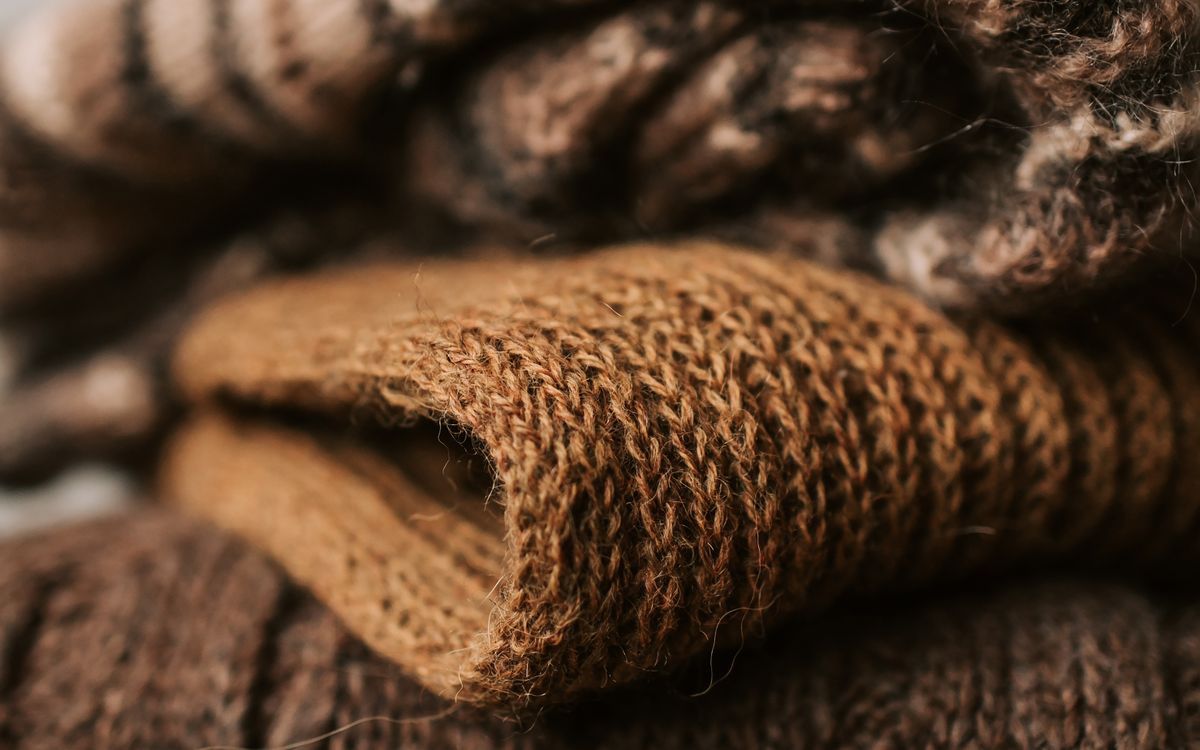
The same 18.5-micron merino fiber goes into a $60 crew and a $120 crew, and both are worth their prices. That is not a contradiction; it is the base layer market working exactly as it should. What you pay for at the bottom of the range is fabric and basic construction. What you pay for at the top is seam placement, fit blocks, and small engineering decisions — gusseted underarms, offset shoulder seams — that matter only after you have worn the garment under a backpack for eight hours. Because the fiber itself is standardized in a way most clothing is not, a merino base layer can be bought almost entirely from numbers. Two of them decide everything: fabric weight and micron count.
Fabric weight is measured in grams per square meter, written g/m² or gsm, and it maps to warmth more directly than any marketing copy. The bands are consistent across brands. Lightweight layers run about 120–150 g/m² and exist for movement — running, hiking, commuting — where trapped heat becomes a liability. Midweight sits near 200 g/m² and is the do-everything winter fabric: warm under a sweater, tolerable indoors, forgiving of start-stop days. Heavyweight runs 230–250 g/m² and above, built for still-air cold, ski days, and people whose offices are unheated.
The mistake buyers make is buying heavyweight for everything, on the theory that warm is warm. A 250 g/m² crew on a brisk indoor errand day turns the wearer into a radiator with nowhere to vent, and the sweater comes off, and the base layer’s whole purpose — staying dry next to skin while the outer layers do the work — collapses. The layering system only functions if the inner layer matches the output. OutdoorGearLab’s November 2026 base layer guide, one of the most thorough independent comparisons available, lands on the same conclusion: midweight covers the widest range of real use, which is why their top women’s everyday pick is a 200 g/m² crew.
Micron count measures the diameter of the wool fiber in thousandths of a millimeter, and it is the number behind every claim of softness. Standard wool often runs above 25 microns, which is where the prickly sweater feeling comes from. Merino spans roughly 15 to 24. Anything labeled superfine sits around 17.5 or below, and the 18.5-micron fiber in most performance base layers is the point where nearly everyone stops noticing the wool is wool.
There is a trap in the marketing here. Finer does not mean more durable — quite the reverse. Ultrafine fibers are delicate, which is why the softest base layers are also the ones that fuzz first at the hip where a backpack strap rides. If you want a deeper map of which wool is which, from lambswool to merino to the coarser wools that belong in coats, our wool types explainer lays out the whole family. For base layers, the practical read is simple: 17.5 to 18.5 microns for next-to-skin comfort, and accept that delicacy is the price of that comfort.
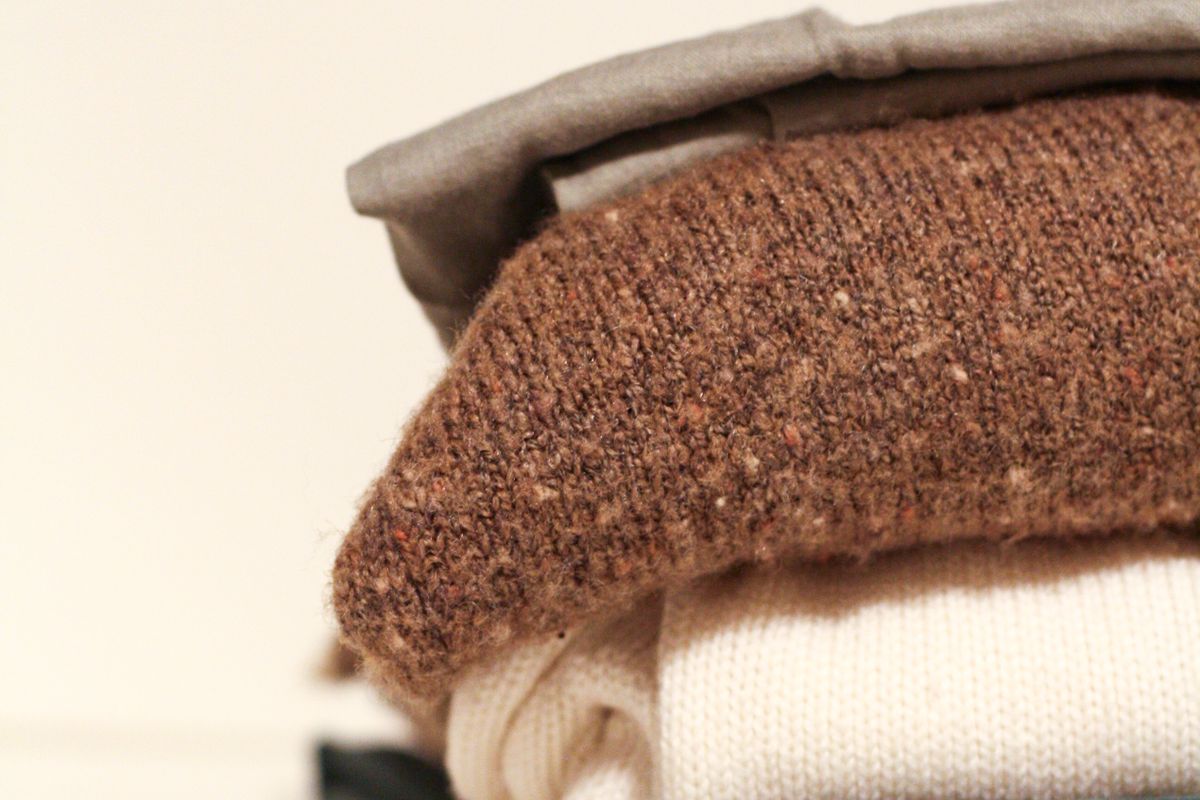
Knit density varies as much as fiber: a tight interlock knit resists snags that a loose knit collects.
Cotton holds up to 27 times its weight in water and stays wet, which is why a cotton sweatshirt under a winter coat feels clammy on the walk and cold by the hour. Merino manages moisture two ways. The fiber absorbs water vapor into its core, moving it off skin, while the surface sheds liquid, so the garment dries faster and never feels saturated. And unlike every synthetic, wool generates a small amount of heat as it absorbs moisture — the chemistry of wool actually warms the wearer during the wicking, which is why a damp merino layer never produces the chill of a damp cotton one.
The odor story is real, not folklore. Sweat itself is odorless; smell comes from bacteria breaking it down, and the bacterial species that thrive on wool differ from the ones that colonize synthetics. Merino base layers can be worn several days running before they announce themselves, which is why every ski-trip packing list on the internet says one merino crew, three days. That claim holds up in owner reviews across all three brands below.
Icebreaker Merino 200 Oasis Crewe. The 200 Oasis is the midweight benchmark: 200 g/m² of 100 percent merino at 18.5 microns, cut slim, with the seam engineering that separates a good base layer from a good sweater — offset shoulder seams that sit away from pack straps, gusseted underarms for reach, flatlock stitching throughout. OutdoorGearLab’s 2026 guide names it their best everyday base layer for women, and its list price is $120. The recurring complaint in owner feedback concerns body length: taller wearers report the hem and sleeves riding up when arms go overhead, so if you are above roughly 5’9”, either size up or test the reach in a fitting room. Everyone else gets the most balanced all-rounder on the market.
Smartwool Classic Thermal Merino Base Layer Crew. Where Icebreaker covers the middle, Smartwool’s Classic Thermal owns the cold end: 250 g/m² of 100 percent ZQ-certified merino in an interlock knit, listed around $115. ZQ is the New Zealand wool certification covering animal welfare and fiber quality — a supply-chain detail, but one that correlates with consistent fiber across seasons. OutdoorGearLab made the Classic Thermal its overall top pick, and the design choices are the comfort-first ones: a slightly looser fit than the Oasis, raglan sleeves, flatlock seams, a fit that reads closer to a favorite shirt than a wetsuit. The trade is bulk under tailored layers; this is the crew for a walk, a ski day, or a cold house, less so for a blazer over the top.
Merino.tech 250 Crew. The value case. Merino.tech’s 250 g/m² crew lists at $60 — half the established brands — and OutdoorGearLab names it their best-value women’s merino pick. The fiber is genuine midweight merino at a comparable micron rating, and the garment does the core job: warmth, moisture handling, multi-day odor resistance. What the price buys out is refinement — simpler seam finishing, a cut that fits fewer bodies as precisely, and faster surface fuzzing over the first season. As a first merino layer, or as the spare crew that rotates into laundry cycles, it does 90 percent of the premium job at 50 percent of the price, and no other spec sheet here is that lopsided.
| Crew | Fabric weight | Fiber | Standout | List price |
|---|---|---|---|---|
| Icebreaker 200 Oasis Crewe | 200 g/m² | 100% merino, 18.5 micron | Seam engineering, slim fit | $120 |
| Smartwool Classic Thermal Crew | 250 g/m² | 100% ZQ merino | Warmth, relaxed fit | $115 |
| Merino.tech 250 Crew | 250 g/m² | 100% merino | Price-to-performance | $60 |
A base layer works by sitting against skin, so its fit vocabulary is snug, not tight. The garment should contact the body at chest and shoulders without compressing, and any looseness shows up immediately as cold drafts at the cuffs and hem — the layer insulates by trapping still air against skin, and moving air defeats it. Brand size charts are more reliable here than in most clothing, because technical fit is a spec, not a suggestion; buy the chart size.
Seam placement is the invisible upgrade you pay for in the premium crews. Flatlock seams lie flat inside the garment instead of stacking fabric, which is why a well-made crew chafes nothing over an eight-hour day. Offset shoulder seams move the top seam away from the exact line a backpack strap compresses. Underarm gussets add fabric where the body needs range. None of this appears on a hang tag, and all of it appears on day two of carrying anything heavier than a purse.
Merino care is easier than its reputation, with two rules doing most of the work. Wash on the machine’s gentle cycle in cool water, ideally in a mesh bag, and dry flat — a hanger stretches wet merino at the shoulder permanently, and a hot dryer is how a $120 crew becomes a crop top. The care label symbols on these garments are worth reading once before the first wash.
Pilling is the wear pattern to expect rather than fear. Fine merino fibers are delicate, so friction zones — hip, sleeve side, wherever a strap crosses — fuzz first. The mechanics and the fix are the same as for any knit, and the short version is a fabric shaver used lightly, never pressed. A base layer that pills at the hip in year one is not defective. It is 18.5-micron fiber doing softness the hard way.
Match the purchase to the cold you actually live in. The Icebreaker 200 Oasis is the single-crew answer for most women — midweight, 18.5-micron comfort, and seam placement that survives real loads — provided the length fits your frame. Move to the Smartwool Classic Thermal if your winter is still-air cold, your office is underheated, or the 200 crew has never felt like enough. Start with the Merino.tech 250 if merino is unproven in your wardrobe, or if you want two rotating crews for the price of one premium layer.
One boundary belongs in the verdict. A base layer is a layer, not a coat; its job is moisture management and still-air warmth under everything else. Under a proper winter shell it performs as designed, and the piece doing the wind-blocking work is the one from our best winter coats for women selection. Buy the crew for what it touches — skin, comfort, laundry logistics — and let the outer layers handle the weather.
Match the weight to the output. Lightweight, around 120–150 g/m², suits high-movement days and indoor commuting; midweight, around 200 g/m², is the all-purpose winter choice; heavyweight, 230–250 g/m² and up, is for still-air cold — skiing, winter walking, or anyone who runs cold. One midweight crew covers more situations than any other single purchase.
It means the opposite, despite sounding like it. Micron count measures fiber diameter, and lower numbers are finer, softer fibers. Merino runs roughly 15 to 24 microns; anything labeled superfine sits near 17.5 or below. Two garments at the same weight can feel completely different against skin because of this one number.
Most modern merino base layers are machine washable on a gentle, cool cycle because the yarn is treated for it — check the care label rather than assuming. The rule that actually protects the garment is drying: dry flat or tumble low, and never hang a wet merino crew, whose own weight stretches the shoulders while it dries.
Everything on this page comes back to one question: what does the label tell you, and what does the thing do on month three? Start at the care companion to build a washing and storage routine that fits what you actually own.
The ASTM D5489 symbol system, decoded operation by operation.
Cool-water washing, de-pilling without damage, moth-proof storage.
What feeds the aging curve and what breaks it.
Claire Whitmore · Updated October 10, 2026
Claire Whitmore · Updated October 9, 2026
Claire Whitmore · Updated October 9, 2026
Claire Whitmore · Updated October 1, 2026