Guides
How to Use a Size Chart: Measurements, Ease and Vanity Sizing
Size charts work only if you feed them the right numbers. How to measure yourself, read garment measurements, and pick a size when brands grade their blocks differently.
Clothing, shoes & accessories, honestly reviewed
Guides
Size charts work only if you feed them the right numbers. How to measure yourself, read garment measurements, and pick a size when brands grade their blocks differently.
By Claire Whitmore · Fashion Editor
Last updated November 6, 2026
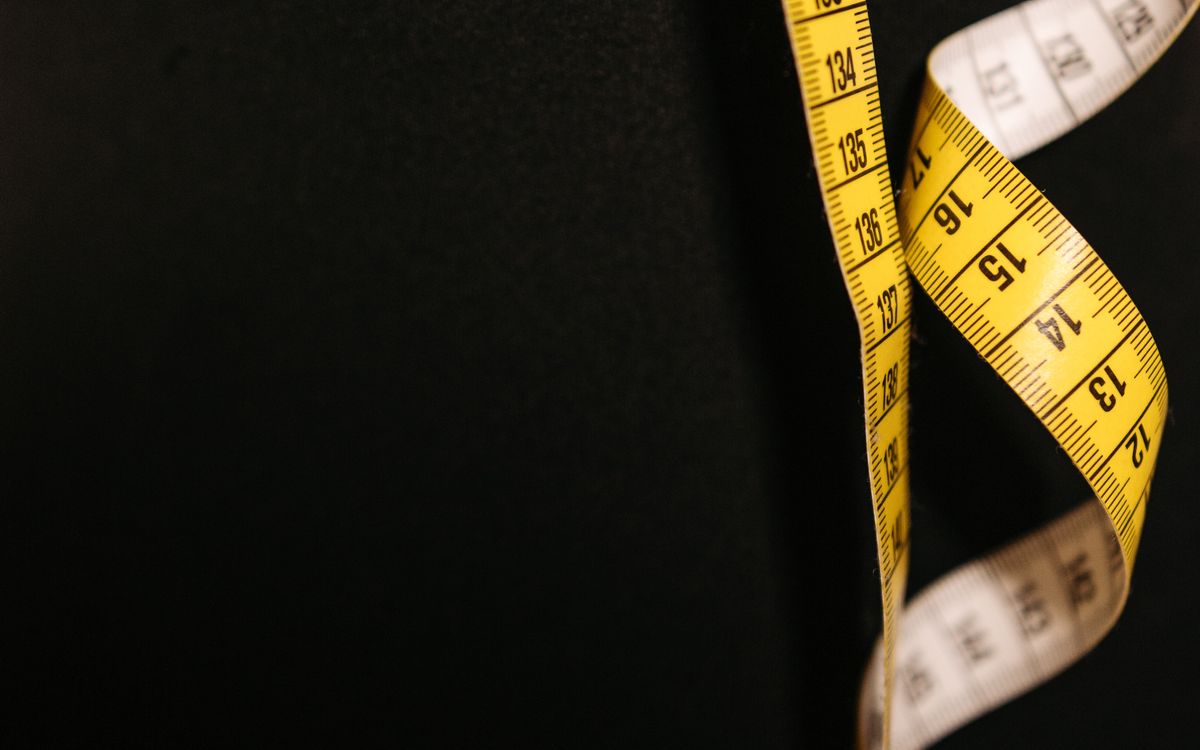
Two sweaters hung on the same rail last month, both marked M, and one was two inches wider across the chest than the other. Nobody in the store found this odd, which is the strangest part of the whole sizing business. The letters stopped meaning anything decades ago. What still means something is the tape measure, the chart printed under the product photos, and the small arithmetic that connects them. Most sizing disappointments — the coat that gaps, the shirt that pulls — are not fit problems at all. They are arithmetic problems, and arithmetic can be checked before you pay.
Charts ask for three numbers: bust at the fullest point, waist at the narrowest, hips at the fullest. Stand relaxed, tape parallel to the floor, tape touching but not compressing the skin. Two habits wreck the numbers. One is sucking in at the waist, which produces a figure that exists for the eight seconds of the measurement and never again — every skirt bought against it rides up by noon. The second is measuring over a coat. Do it over the layer you will wear under the garment, nothing more.
Write the numbers down once, in inches and centimeters, and they stay good for years with the occasional recheck. Bodies shift. Charts do not. The three minutes this takes is the whole cost of never again guessing whether a medium is a medium.
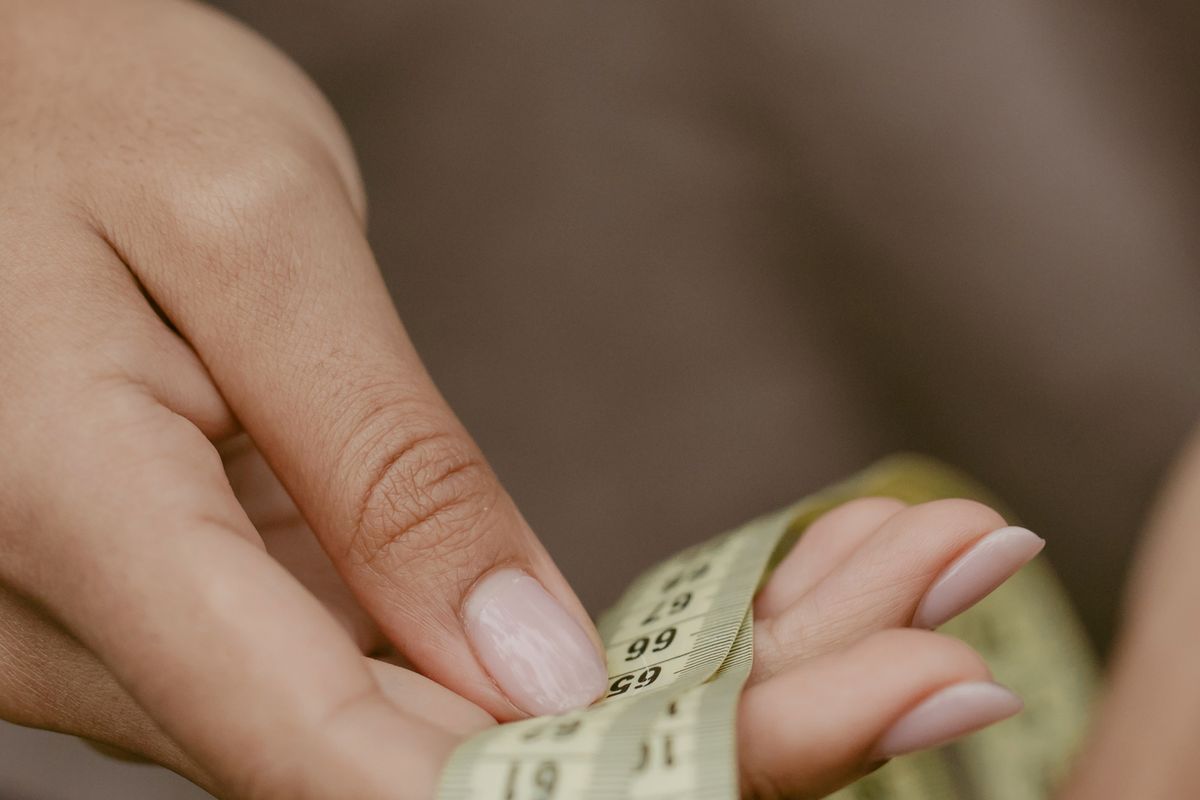
Tape numbers run in centimeters and inches on the same band — charts may use either, so record both.
Here is the detail most shoppers miss. A good chart lists two kinds of numbers, and they are not interchangeable. Body measurements describe the person the size was graded for. Garment measurements describe the actual object — pit to pit across the front, waistband circumference, inseam. Some shops print both; many print only the body numbers, and a few, mostly smaller labels, list flat measurements because they are the only honest ones a seller can take without a fitting model.
When a listing gives garment measurements, compare them against a piece you already own that fits. Lay your best-fitting shirt flat, button it, measure armpit to armpit, and double the number. If your shirt measures 20 inches pit to pit and the new one measures 19, the new one is one inch tighter at the chest, regardless of what letter is printed on its tag. This one comparison outranks any chart on any website, because it compares cloth to cloth.
A garment cut to exactly your measurements would feel like a cast. The room between your body and the cloth is called ease, and it is the single most useful concept in sizing — and the one no chart prints.
Woven fabric does not stretch, so wovens live on positive ease: about two to four inches at the bust and hip for a shirt you want to move in, more for anything described as relaxed or oversized. Stretch knits run on negative ease. A leggings pattern is cut several inches smaller than the body it fits because the fabric closes the gap. This is why a “large” in a knit top can measure smaller than a “large” in a woven shirt and both are correct. Read the fiber content for elastic or spandex before you judge a chart, and the numbers start making sense.
Between two sizes, ease decides the direction. Structured garments — blazers, non-stretch trousers, anything with a lining — forgive a size up and punish a size down, because a tailor can remove cloth but cannot add it. Negative-ease knits forgive the size down and punish the size up, which loses the compression the pattern counted on.
US sizing has been optional since the government standard was abandoned, and brands spent the decades since quietly renumbering. The tape measurements that ordered a size 16 in mid-century catalogs order a size 8 today. The practice has a name, vanity sizing, and once you know it, the shrinkage of your “usual size” over time stops being personal.
The practical consequence is that every brand grades from its own base block — a master pattern for one prototype body — and every size up or down drifts further from every other brand’s version of the same code. European brands cut differently again, and their US conversions are approximations at best. This is not sloppiness to be tolerated; it is the reason the chart exists. The size code is marketing. The measurements are engineering. Read one, ignore the other.
Bras run on an entirely separate logic — band and cup scale against each other, which is why the same body maps to several “sizes” — and our bra sister sizes explainer covers that arithmetic. Shoes grade on their own lasts too, so the same rule applies there; the fit checks in how to tell if shoes fit right transfer almost word for word.
The fiber content line changes how you use every number above. Rigid cotton poplin shrinks a little and forgives nothing. Merino and other animal fibers relax with wear, so a snug first fit may be the correct fit by the third wear. Anything with 5 percent elastane will give a half size of stretch and then recover — or, worn tight repeatedly, give up and bag out. The fabric guide to clothes that last goes deeper on which fibers do which.
Shrinkage deserves one concrete number: cotton knit garments commonly lose a small percentage of length in the first hot wash and dry, which is enough to turn a correct inseam into a flood. Buy rigid cotton with that loss in mind, or wash cold and dry flat from day one.
None of this requires a tailor’s training. The working routine is three steps. Keep your own three measurements current. When a shop lists garment measurements, compare against a piece you own instead of against your body. And when a shop lists neither, treat the brand’s size code as a starting hypothesis and buy from a retailer whose return policy tolerates one trial order.
That last step is not an admission of defeat; it is the standard procedure. Fit is physical, bodies are individual, and no grading system will ever capture a shoulder or a seat precisely from three numbers. But between a current tape measure, a flat-measurement comparison and a return window, the guesswork shrinks to nearly nothing. The labels will still disagree with each other. They just stop disagreeing with you.
Order the chart size, and ignore what the number means emotionally. A size is a code for a set of tape measurements, and the codes drift by brand and decade. If the chart says your waist maps to a 10 and you have worn an 8 for years, the 8 will either not zip or pull at the seam.
Woven clothes need wearing ease of roughly two to four inches at the bust and hip, more if the design is meant to be loose. Stretch knits can be cut with negative ease, meaning the garment measures smaller than the body, because the fabric supplies the missing room. The fabric content on the label tells you which situation you are in.
There has been no enforced US sizing standard since the government abandoned it decades ago, and brands quietly renumbered sizes over the years to flatter customers. Each company grades from its own base block, so identical body measurements land on different size codes. The chart, not the code, is the real information.
Everything on this page comes back to one question: what does the label tell you, and what does the thing do on month three? Start at the care companion to build a washing and storage routine that fits what you actually own.
The ASTM D5489 symbol system, decoded operation by operation.
Cool-water washing, de-pilling without damage, moth-proof storage.
What feeds the aging curve and what breaks it.
Claire Whitmore · Updated October 12, 2026
Claire Whitmore · Updated October 12, 2026
Claire Whitmore · Updated October 12, 2026
Claire Whitmore · Updated October 10, 2026