Jewelry
Solid Gold, Vermeil, Gold-Filled, Plated: What the Terms Legally Mean
The FTC's Jewelry Guides set legal floors for vermeil, gold-filled and plated gold. What each term actually guarantees, how to read stamps, and how long each wears.
Clothing, shoes & accessories, honestly reviewed
Jewelry
The FTC's Jewelry Guides set legal floors for vermeil, gold-filled and plated gold. What each term actually guarantees, how to read stamps, and how long each wears.
By Elena Brooks · Accessories & Jewelry Editor
Last updated September 19, 2026
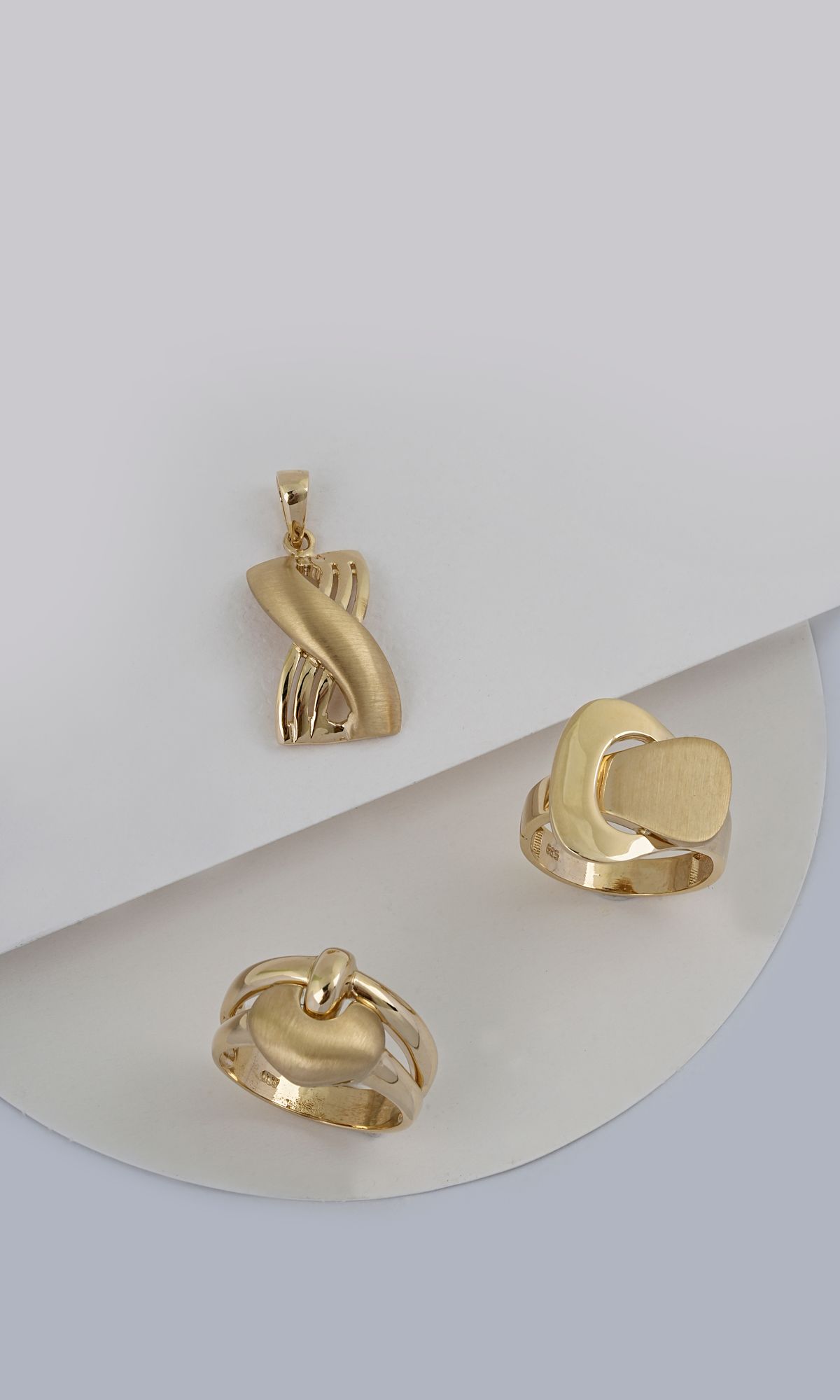
The four gold terms on a jewelry listing are not marketing synonyms — three of them have legal definitions with specific purity and thickness floors, and one (“gold plated”) has almost none. Knowing which is which tells you more about a piece’s lifespan than any product photo, because the difference between terms can be a hundred-fold difference in actual gold content.
“Solid gold” means the piece is gold alloy throughout, not hollow and not plated, and the FTC’s consumer guidance says it must carry a karat mark such as 14K or 18K. Karat measures purity out of 24 parts: 18k is 75% gold, 14k is 58.3%, and 10k — the legal minimum for marketing a piece simply as gold jewelry in the US — is 41.7%. The remainder is alloy metal chosen for strength and color, which is why 14k wears harder than 18k while looking slightly paler. European pieces use the millesimal equivalent stamped instead: 417 for 10k, 585 for 14k, 750 for 18k. Solid gold has no coating to wear through, so its finish is effectively permanent; scratches occur, but they can be polished out without losing anything.
Vermeil is the one plated category the FTC defines tightly. Under the agency’s Guides for the Jewelry, Precious Metals, and Pewter Industries (16 CFR Part 23), a piece can only be sold as vermeil if its base is sterling silver and the gold layer is at least 10k purity and at least 2.5 microns thick. That floor is roughly fourteen times thicker than the minimum allowed for the regulated term “gold electroplate,” which requires only 0.175 microns of 10k gold. In practice, vermeil lasts roughly one to three years of daily wear before thinning at contact points — and because the base is silver, what emerges underneath is hypoallergenic metal rather than reactive brass.
Gold filled is measured by weight fraction instead of microns. The FTC requires a mechanically bonded layer of at least 10k gold making up at least 1/20 of the item’s total weight; anything less must state its actual fraction in the marking, like “1/40 14K gold overlay.” The bonding process (heat and pressure rolling a gold sheet onto a core) produces a layer measured in tens of microns — far more gold than any electroplate. Stamps read “1/20 14K GF” or “14K G.F.” This is the durable middle tier: a 14k gold-filled piece commonly lasts 10 to 30 years of regular wear, and the term “rolled gold plate” (RGP) is the telltale that a piece fell below the 1/20 threshold.
Here is the gap that trips up most buyers. The FTC requires honest labeling — a plated piece cannot be sold as solid gold — but “gold plated” itself has no minimum thickness at all. A listing can legally use those two words for a coating of a fraction of a micron or several microns, and the FTC’s consumer guidance separately warns that “gold flashed” and “gold washed” describe even thinner coatings that wear away faster still. The only regulated floor is the specific term “gold electroplate” (0.175 microns of 10k). This is why two identically priced “gold plated” chains can differ enormously in lifespan, and why asking for a micron specification is the only like-for-like comparison.
US stamps to know: 10K/14K/18K for solid gold, 417/585/750 as their millesimal equivalents, “1/20 14K GF” for gold filled, and 925 (or .925) for sterling silver — which, by law, must also carry the name or US-registered trademark of the company standing behind the mark. Two useful cross-checks: a piece stamped 925 with a gold color is vermeil or plated silver, not solid gold, and a magnet sticks to steel or iron cores but not to gold, silver, or copper — so the magnet test rules out steel, though it cannot confirm gold. For expensive pieces, a jeweler’s XRF scan reads the alloy composition directly without damaging the item.
Rough wearing order, longest first: solid gold (permanent finish), gold filled (decades), vermeil (one to three years), regulated gold electroplate (months to a year), plain gold plated and gold flashed (months). The common thread in every category’s failure mode is friction and chemistry, not water alone — clasps and chain links lose plating first, and perfume or chlorine accelerate the wear. For how the same logic plays out on silver-colored metals, see sterling silver vs stainless steel, and for keeping any of these finishes clean without shortening their life, read how to clean jewelry safely.
Yes. The FTC's Guides for the Jewelry, Precious Metals, and Pewter Industries (16 CFR Part 23) require vermeil to be sterling silver plated with gold of at least 10k purity and at least 2.5 microns thick. Anything thinner or on a different base metal must be sold under another term, such as gold plated.
It means the gold layer makes up at least one-twentieth (5%) of the item's total weight and that gold is 14 karat. The FTC requires gold-filled markings to state both the karat quality and the proportion, so a layer below 1/20 must be marked with its actual fraction, such as 1/40 14K.
Plain gold plating carries no legal minimum thickness and commonly shows wear within months of daily use. Gold filled, with its mechanically bonded layer of at least 1/20 weight in 10k-or-higher gold, is typically cited as lasting 10 to 30 years of regular wear because its gold layer is far thicker than any electroplate.
Elena Brooks · Updated September 19, 2026
Elena Brooks · Updated September 19, 2026
Elena Brooks · Updated September 19, 2026